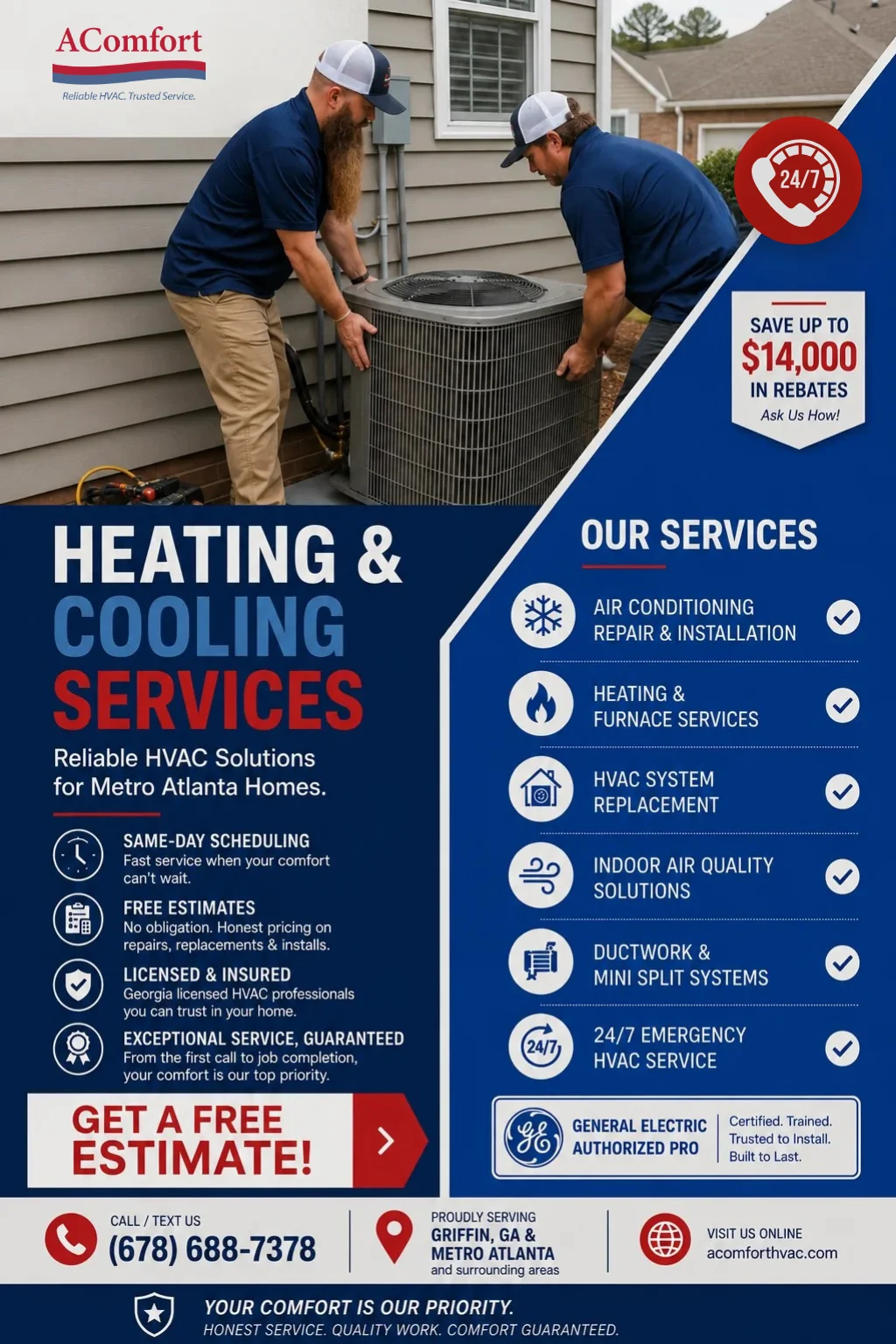
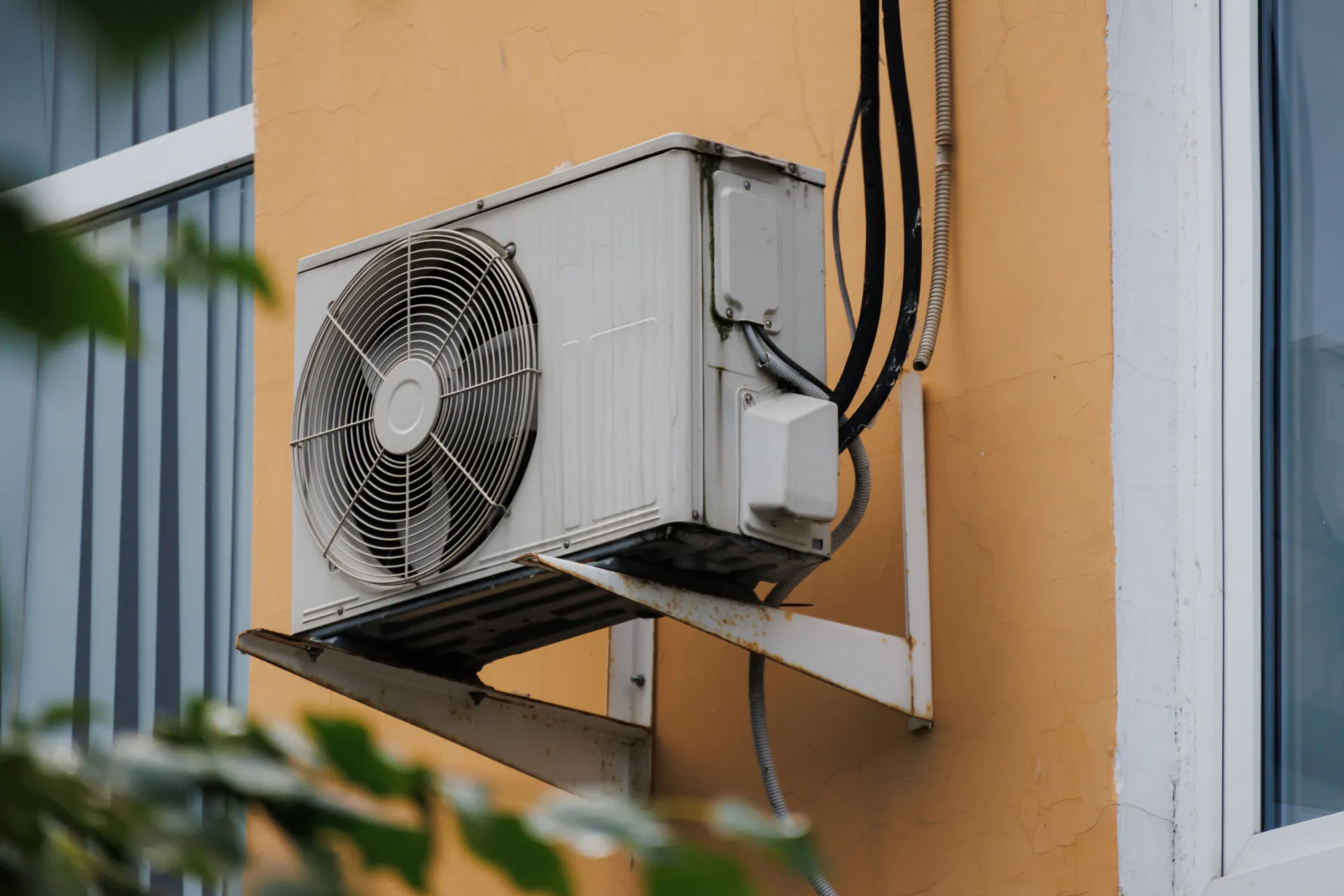
Replacing an HVAC system is a significant household expense. For homeowners in Metro Atlanta, the cost depends on the equipment, system size, installation requirements, ductwork, electrical work, and other project details.
You don't necessarily have to pay the entire cost upfront. Several financing options can spread the expense over time. Depending on your utility, household income, and the type of project, you may also qualify for utility rebates or state energy-efficiency incentives that reduce your overall cost.
Here are the main options to consider.
Start With the Total HVAC Replacement Cost
Before choosing financing, get a detailed estimate from a licensed HVAC contractor. In Georgia, HVAC contractors are licensed by the State Construction Industry Licensing Board, and you can verify a license through the Georgia Secretary of State's website.
The quote should clearly identify the equipment, installation labor, permits, removal of the existing system, and any additional work. The price can change if your home needs duct modifications, electrical upgrades, a new thermostat, or other improvements.
Ask for an itemized proposal instead of focusing only on the monthly payment. A lower monthly payment often comes from a longer repayment period, which can mean paying more in total.
It's also worth asking whether the cash price and the financed price are the same. Some financing programs charge the contractor a fee, and that cost may be built into the project price.
HVAC Financing Options
Contractor Financing
Many HVAC companies offer financing through third-party lenders. Options may include fixed monthly payments or promotional financing, such as a period with no interest.
Terms vary considerably. Before accepting an offer, review the annual percentage rate (APR), repayment period, fees, promotional period, and conditions.
Pay close attention to whether a promotional plan is "deferred interest." Offers worded as "no interest if paid in full" often work this way. If the balance isn't fully paid by the end of the promotional period, you may owe all the interest that built up from the purchase date, calculated on the original amount, not just the remaining balance. A true 0% APR plan works differently: interest only begins on whatever balance remains after the promotion ends. Check the written terms to confirm which type you're being offered.
Contractor financing is convenient because it's arranged as part of the replacement process. Still, compare its terms with other options, and ask whether the project price changes if you pay another way.
Home Equity Loan or HELOC
Homeowners with enough equity may consider a home equity loan or a home equity line of credit (HELOC).
A home equity loan usually provides a lump sum with a fixed interest rate and fixed monthly payments. A HELOC works more like a credit line you can draw from as needed, and it usually has a variable interest rate, so your payment can change over time. Many HELOCs also allow lower, interest-only payments at first, then require larger payments once the repayment period begins.
Both products typically carry lower rates than unsecured credit, but they use your home as collateral. If you can't make the payments, your home could be at risk. Approval can also take a few weeks, and closing costs or other fees may apply, so review the full terms before using one for an HVAC project.
Personal Loan
An unsecured personal loan is another option. Unlike a home equity loan or HELOC, it doesn't use your home as collateral, and funding is often faster, sometimes within a few days.
Interest rates and terms depend on the lender and your qualifications, including your credit history, income, existing debt, loan amount, and repayment term. Most personal loans have fixed rates and fixed monthly payments. Some also charge an origination fee, which may be taken out of the loan amount, so you could receive less than you borrow.
Compare the APR and total repayment amount, not just the monthly payment.
HVAC Rebates and Incentives in Georgia
Electric Utility Rebates
Metro Atlanta homes are served by different electric providers, including Georgia Power, electric membership corporations (EMCs), and some city-owned utilities. Rebate programs vary by provider, so start by checking the program offered by the utility on your electric bill.
Georgia Power Home Energy Improvement Program
If you're a Georgia Power customer, check its Home Energy Improvement Program before buying equipment. As of September 2026, Georgia Power offers rebates of up to 50% of the cost of qualifying improvements, with limits for each improvement. HVAC-related examples include:
- Up to $1,500 for replacing an existing electric furnace with an air-source heat pump.
- Up to $75 for an HVAC maintenance and tune-up on electric equipment (a heat pump or electric furnace).
- Up to $600 for qualifying duct sealing improvements. Eligibility and installation requirements depend on the specific improvement, so review Georgia Power's current program terms before applying.
- Instant rebates on certain ductless mini-split heat pumps, applied through an affiliated installer.
These rebates have specific conditions. For example, the $1,500 heat pump rebate applies only when the new heat pump replaces an electric furnace, so replacing a gas furnace or swapping one heat pump for another would not qualify for that rebate. HVAC improvements must be completed by a licensed installer, and some improvements require a Georgia Power Program Installer or another specially certified professional.
Timing also matters. For most improvements, you apply for the rebate within 60 days of your paid-in-full invoice, and the rebate is mailed about six to eight weeks after a complete application. Rebates are capped at $2,500 per customer per year.
A rebate is not financing. It reduces what you ultimately pay, but in many cases you'll need to cover the full cost first and receive the rebate afterward.
Georgia's Home Energy Rebates
Georgia's Home Energy Rebates are federally funded and administered by the Georgia Environmental Finance Authority (GEFA). The program has two parts, and they're in very different situations right now.
Home Efficiency Rebates (HER)
The HER program is open to households at all income levels. It supports whole-home efficiency upgrades that reduce your home's expected energy use by at least 20%. Incentives depend on your household income compared to your county's area median income (AMI) and on the projected energy savings:
- Households at or above 80% of AMI can receive up to 50% of project costs, capped at $2,000 for 20–34% energy savings or $4,000 for savings of 35% or more.
- Households below 80% of AMI can receive up to 98% of project costs, capped at $10,000 or $16,000 depending on energy savings.
HER projects start with a home energy assessment by a program-approved contractor, and there may be a fee for that assessment. The work must be completed through a program-approved contractor, so verify the contractor's status in GEFA's approved contractor directory before moving forward.
Home Electrification and Appliance Rebates (HEAR)
Georgia's HEAR program paused new applications on August 14, 2026. The state announced plans to reopen it in October with limited funding and a narrower range of eligible improvements.
Under the revised program, eligible single-family applicants may receive rebates for electrical wiring and panel upgrades when these improvements are part of an eligible Home Efficiency Rebates (HER) project. The program will not reopen for multifamily projects.
Because program availability and eligibility can change, check Georgia's official Home Energy Rebates website before including a HEAR rebate in your HVAC replacement budget.
Federal HVAC Tax Credits
Federal energy tax credits for home HVAC upgrades ended after 2025, so be careful with older articles that still describe credits from previous years.
The IRS states that the Energy Efficient Home Improvement Credit cannot be claimed for expenditures or property placed in service after December 31, 2025. This was the credit that previously covered qualifying heat pumps, central air conditioners, and furnaces. The IRS also states that the Residential Clean Energy Credit, which covered geothermal heat pumps among other items, cannot be claimed for expenditures made after December 31, 2025.
A homeowner replacing an HVAC system in 2026 should not expect a federal HVAC tax credit to reduce the cost. If your system was installed in 2025, you may still be able to claim a credit on your 2025 return. Check current IRS guidance and talk with a qualified tax professional about your situation.
How Your Credit Score Affects HVAC Financing
Your credit score can affect your eligibility for HVAC financing, the interest rate you receive, and the repayment terms available to you. Lenders may also consider your income, existing debt, payment history, and other financial information when reviewing your application.
A higher credit score may help you qualify for lower interest rates, while a lower score could mean higher rates, stricter terms, or fewer financing options. However, each lender sets its own approval criteria, so there is no single credit score that guarantees HVAC financing approval.
Before applying, review your credit reports for errors and compare offers from multiple lenders. Ask whether checking your eligibility requires a soft credit inquiry or a hard inquiry, which can affect your credit score. Comparing the APR and total repayment amount can help you identify an option that fits your budget.
How to Compare HVAC Financing Offers
When comparing HVAC financing options, look beyond the monthly payment. Consider these factors:
- APR: How much interest will you pay?
- Loan term: How long will you make payments?
- Total repayment: What will the system cost after financing?
- Upfront costs: Are there application fees, origination fees, closing costs, or required deposits?
- Promotional terms: Does a special rate expire? Is interest deferred?
- Rate type: Is the rate fixed or variable?
- Prepayment terms: Can you pay the balance early without a penalty?
- Rebate timing: Will the rebate reduce the price upfront, or will it arrive weeks later?
For example, a five-year loan and a 10-year loan for the same installation can have very different monthly payments and total costs.
If you are planning an HVAC replacement in Metro Atlanta, AComfort offers financing options to help make the cost of a new system more manageable. Available plans and terms can vary, so ask about the current financing options when requesting your estimate.
Questions to Ask Your HVAC Contractor
Before signing an HVAC replacement agreement, ask:
- What is included in the quoted price?
- Is the cash price different from the financed price?
- What financing options are available, and what is the APR for each?
- How long is the repayment period, and what is the total amount I will repay?
- Is promotional financing true 0% APR or deferred interest?
- What happens when the promotional period ends?
- Does the equipment qualify for current rebates from my electric utility?
- Is the contractor licensed, and is it approved for any rebate program I plan to use?
- Who submits the rebate application, and when will I receive the rebate?
Getting these answers in writing makes it easier to compare offers.
Choose Financing That Fits Your Budget
A new HVAC system should fit both your home's comfort needs and your household budget. Avoid choosing a system only because it has the lowest monthly payment.
Instead, compare the equipment price, installation scope, financing cost, available rebates, and payment schedule together.
For Metro Atlanta homeowners, checking your electric utility's incentives and Georgia's HER program before signing a contract can help identify potential savings. Program rules and funding change often, so verify current requirements at the time of purchase.
Final Thoughts
Financing can make a new HVAC system more manageable when paying the full cost upfront isn't practical. Contractor financing, personal loans, and home equity products each have different costs and risks.
Start with a detailed, itemized estimate, compare the total cost of each financing option, and check current utility and state incentives before making a decision. This approach helps you understand the true cost of your replacement, not just the monthly payment.
Need Help Financing Your New HVAC System?
AComfort can help you explore your HVAC replacement options in Metro Atlanta. Request an estimate to understand your equipment, installation costs, and available financing options before moving forward.
Request an HVAC Estimate