
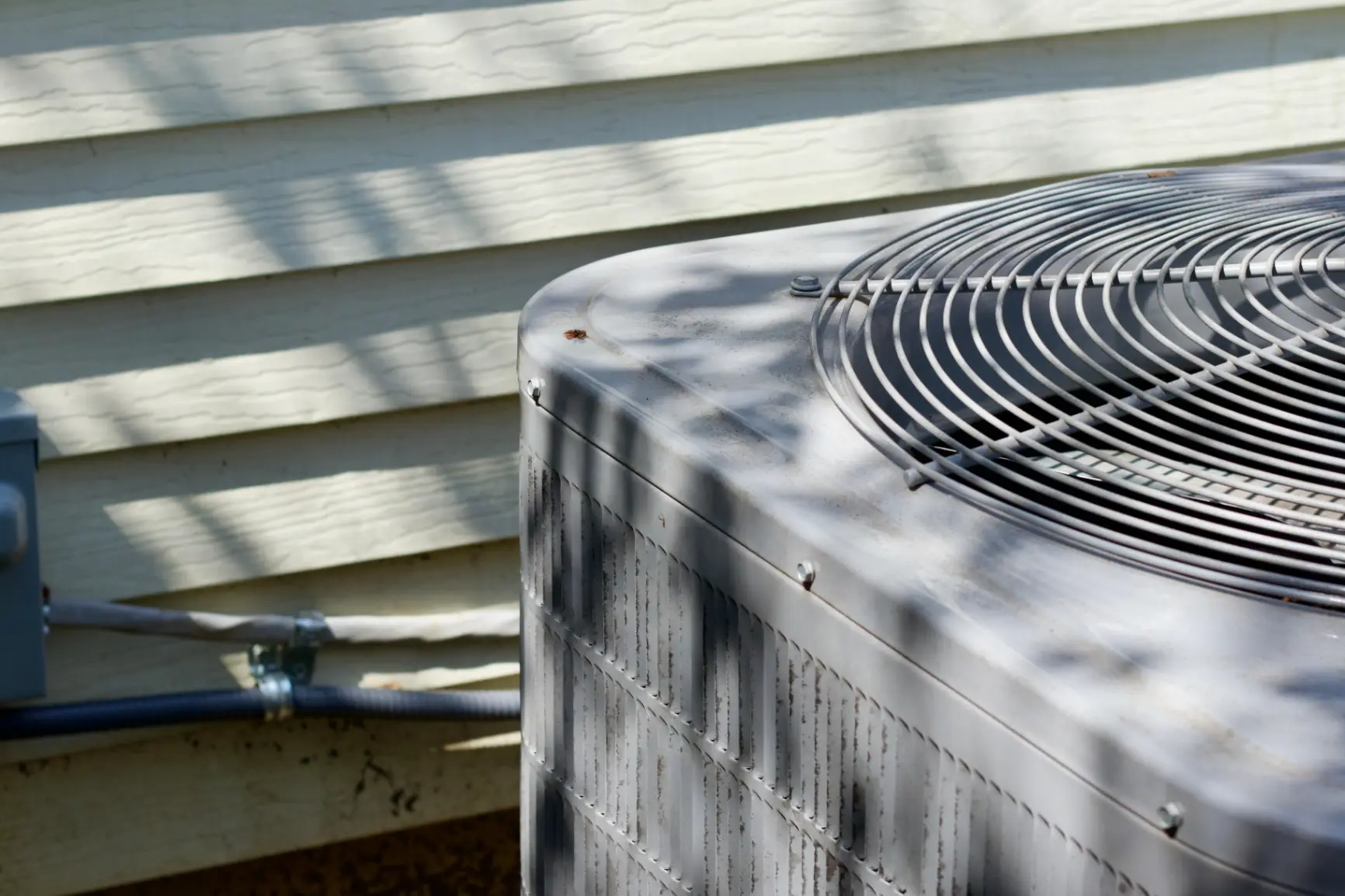
Shopping for a new air conditioner means running into a SEER or SEER2 rating on the equipment label. Understanding SEER ratings helps you compare the cooling efficiency of different AC units, but the number alone will not tell you which system is right for your home.
This guide explains what the SEER rating means, how SEER2 changed the rating scale, what the minimum efficiency standards are in Georgia, and what homeowners need to know before choosing a new HVAC system.
What Does SEER Stand For?
SEER stands for Seasonal Energy Efficiency Ratio. The term "SEER rating" describes how efficiently an air conditioner or heat pump cools a home over a typical cooling season.
An air conditioner converts electricity into cooling by moving heat out of your home. The SEER rating measures the total cooling output (in British thermal units, or BTUs) over a typical cooling season, divided by the total electricity used (in watt-hours). That makes the SEER unit BTU per watt-hour. A higher SEER means more cooling for each unit of electricity under the test conditions.
SEER vs. SEER2: What Changed?
Since January 1, 2023, new air conditioners and heat pumps are rated using SEER2, an updated federal test procedure. The main difference between SEER and SEER2 is the testing method. SEER2 tests equipment under conditions closer to real-world airflow and duct resistance, so the numbers come out slightly lower than the old scale, roughly 5% lower for the same equipment.
Contractors still say "SEER" in everyday conversation, but every new system with a rating should be labeled with SEER2. The table below shows approximate conversions.
| Older SEER rating | Approximate SEER2 |
|---|---|
| 14 SEER | about 13.3 |
| 16 SEER | about 15.2 |
| 18 SEER | about 17.1 |
| 20 SEER | about 19 |
These are estimates. The label on the actual equipment is the number to trust.
Why SEER Ratings Matter in McDonough
McDonough sits in the Southeast region under the federal efficiency standards, and Georgia's long, hot cooling season means air conditioning can account for a large share of household electricity use. A more efficient system can use less electricity for the same amount of cooling.
The SEER rating is not a direct prediction of your energy bills, though. Real cooling costs depend on:
- How often the system runs
- Thermostat settings
- Outdoor temperatures
- Home insulation and air leakage
- Ductwork condition
- System size
- Equipment condition and installation quality
- Electricity rates
Minimum SEER Rating in Georgia
Federal efficiency standards for residential central air conditioners vary by region, equipment type, and cooling capacity. Split-system air conditioners installed in the Southeast, which includes Georgia, must meet these minimum SEER2 ratings:
| System type | Cooling capacity | Minimum SEER2 | Old-scale equivalent |
|---|---|---|---|
| Split-system air conditioner (Southeast) | Less than 45,000 Btu/h | 14.3 | about 15.0 SEER |
| Split-system air conditioner (Southeast) | 45,000 Btu/h or more | 13.8 | about 14.5 SEER |
| Split-system heat pump (nationwide) | All capacities | 14.3 (plus 7.5 HSPF2) | about 15.0 SEER |
These minimum efficiency requirements have applied since January 1, 2023. Packaged units follow different standards, so your contractor should confirm the minimum SEER2 rating for your specific equipment.
Older systems were held to lower standards. Many units installed before 2006 are rated around 10 SEER, and a 10 SEER system uses far more electricity than a new one. Georgia's minimum was later raised to 14 SEER, so an older SEER unit in your home is almost certainly less efficient than anything sold today.
What Do 14, 16, 18, and 20 SEER Mean?
Higher SEER systems use less electricity for the same cooling output. Because energy use is inversely related to the rating, you can estimate the difference on paper:
| Upgrade | Approximate drop in cooling electricity |
|---|---|
| 10 SEER to 16 SEER | about 37% |
| 14 SEER to 16 SEER | about 12% |
| 14 SEER to 18 SEER | about 22% |
| 14 SEER to 20 SEER | about 30% |
| 16 SEER to 20 SEER | about 20% |
These figures assume identical cooling output and rated efficiency only. Actual energy savings depend on your home, ducts, and habits. Note that the gains shrink at the top of the scale. Moving from 10 to 16 SEER saves far more than moving from 16 to 20 SEER.
Here is how the common ratings usually look:
- 14 SEER and 14-16 SEER systems are often single-stage models. They run at full capacity whenever they are on.
- 16 SEER (or SEER 16) is a popular middle ground, with better efficiency than the minimum at a moderate price.
- 18 SEER systems and 20 SEER models are commonly two-stage or variable-speed equipment. This is the high SEER range.
Higher SEER Systems and Variable-Speed Compressors
Many high SEER systems rely on variable-speed compressors. Instead of switching fully on and off, a variable-speed system adjusts its output to match the cooling load. Running longer at lower speeds can:
- Use less electricity than repeated full-power cycles
- Keep temperatures more even throughout the home
- Improve humidity control, which matters in Georgia summers
- Run more quietly
This is why choosing a high SEER often means choosing variable-speed technology, and it is part of why higher-rated equipment costs more.
Does a Higher SEER Rating Always Mean Energy Savings?
Not automatically. A higher SEER rating can lower your energy bills, but a high SEER also usually comes with a higher upfront cost. Whether the extra investment pays off depends on:
- How much you use air conditioning during the cooling season
- Local electricity rates
- The price difference between models
- How long you plan to stay in the home
- The condition of your ductwork and insulation
The goal is to find the sweet spot between efficiency and cost. For a homeowner who runs the AC units heavily and plans to stay for many years, a 16 to 18 SEER system may make sense. Another may prefer a lower upfront price with a system near the minimum. Ask your contractor to compare total installed cost and expected operating costs, not just the rating.
SEER Is Not the Same as System Size
The SEER rating measures efficiency. It does not tell you whether the system is the right size. Cooling capacity is measured in tons or BTUs per hour, and a professional load calculation is the right way to choose it.
- An oversized system cools quickly but shuts off before it removes enough humidity.
- An undersized system runs for long stretches and may struggle to cool your home on the hottest days.
Bigger is not better, and a very high SEER rating cannot fix the wrong size.
Installation Quality Affects Efficiency
The efficiency rating comes from standardized lab testing. Real-world SEER performance depends heavily on installation. The Department of Energy points to oversizing, incorrect refrigerant charge, and leaky ducts as common problems that reduce efficiency, comfort, and equipment life.
Pay attention to SEER, but also ask HVAC experts how the system will be sized, matched, installed, and tested.
Look at the Whole HVAC System
The rating depends on a matched indoor and outdoor system working together. A new HVAC system performs best when the contractor also evaluates:
- Ductwork condition and airflow
- Insulation and air leakage
- The thermostat and how it is used
- Filtration and indoor air quality
If ducts leak or airflow is restricted, a more efficient outdoor unit will not fix the underlying problem. SEER does not measure air quality directly, but a well-designed system with proper filtration and humidity control can help keep the indoor air comfortable. Regular maintenance helps the equipment keep operating as rated.
Air Conditioners and Heat Pumps
SEER2 applies to both air conditioners and heat pumps, since both cool your home. A heat pump also provides heating, and its heating efficiency is measured separately by HSPF2. If you are comparing heating and cooling systems, look at both numbers. Heat pumps are a common option for homeowners who want one efficient system for year-round comfort.
Georgia Rebates and Incentives
Incentives change often, so check the current rules before you buy.
- Georgia's Home Energy Rebates are run by the Georgia Environmental Finance Authority (GEFA). At the last check, the state's rebate website said the Home Electrification and Appliance Rebates (HEAR) program was not accepting new applications. The Home Efficiency Rebates (HER) are listed separately, and both programs require a GEFA-approved contractor.
- The federal 25C tax credit for heat pumps and central air conditioners has ended for equipment installed after December 31, 2025.
- Georgia Power and local electric membership corporations may offer their own programs. Check with your utility for current amounts and rules.
Do not assume a rebate applies just because a system has a high SEER2 rating. Confirm eligibility at energyrebates.georgia.gov before signing a contract.
How to Choose the Right SEER Rating
There is no single right SEER rating for every McDonough home. When you compare estimates for a new air conditioner, weigh these together:
- SEER2 rating and the minimum efficiency your equipment must meet
- Cooling capacity and load calculation
- Equipment compatibility and variable-speed options
- Ductwork condition, insulation, and air leakage
- Warranty coverage
- Upfront installation cost
- Expected cooling costs and energy savings
- Available rebates or incentives
Get the Right Heating and Cooling System for Your McDonough Home
If you are considering a new AC, contact AComfort. A professional can assess your home and compare options by efficiency, capacity, installation requirements, and long-term operating costs, so you can cool your home comfortably and efficiently.
Contact Us