Your HVAC system works throughout the year to help keep your home comfortable, but it cannot run efficiently without regular care. Simple maintenance tasks can improve airflow, support indoor comfort, help your equipment operate efficiently, and reduce the risk of unexpected breakdowns.
For Griffin homeowners, following a consistent maintenance routine is one of the easiest ways to keep heating and cooling equipment in better condition. Some tasks, such as replacing an air filter and keeping the outdoor unit clear, are suitable for homeowners. Others, including checking refrigerant levels and inspecting electrical components, should be left to a qualified HVAC technician.
Here are 10 practical HVAC maintenance tips to include in your routine.
1. Replace the Air Filter Regularly
One of the simplest HVAC maintenance tasks is checking the air filter regularly. A dirty or clogged filter can restrict airflow, making the system work harder to circulate air through your home.
Filter replacement intervals vary depending on the filter type, HVAC system, indoor air quality, and manufacturer recommendations. Instead of replacing the filter on a fixed schedule, inspect it regularly and follow the equipment and filter manufacturer's guidance.
A properly installed, clean filter helps maintain airflow and captures airborne particles before they circulate through your home. If the filter becomes dirty sooner than expected, replace it and look for possible causes, such as excess dust, pets, or recent construction.
2. Keep Vents and Registers Clear
Keep supply vents, registers, and return-air grilles free from furniture, rugs, curtains, boxes, and other obstructions. Blocked vents can reduce airflow and make it harder for your HVAC system to distribute conditioned air effectively.
If a room remains unusually warm or cool despite having clear vents, the issue could involve ductwork, insulation, airflow balance, system sizing, or another HVAC problem.
Avoid closing multiple vents to redirect air to other rooms. Your HVAC system is designed to operate within a specific airflow range, and closing too many vents can increase pressure in the ductwork and affect system performance.
3. Keep the Outdoor Unit Clear
Your outdoor air conditioner or heat pump needs adequate airflow to operate efficiently. Keep leaves, grass clippings, branches, weeds, and other debris away from the unit, and prevent vegetation from growing into or blocking it.
Before cleaning around the equipment, turn off the system and follow the manufacturer's safety instructions. Never remove electrical panels or attempt electrical repairs yourself.
If the outdoor coil is heavily soiled or blocked by debris, have a qualified HVAC technician inspect and clean it.
4. Inspect the Condensate Drain for Signs of Trouble
During cooling, your air conditioner removes moisture from indoor air. This moisture collects as condensate and drains away through a condensate drain system.
A clogged drain can cause water to back up around the indoor unit or air handler, potentially leading to water damage. Check the area around the indoor unit and drain for visible water, staining, or unusual moisture.
If you notice a leak or recurring drainage problem, schedule HVAC service. Avoid attempting to clear or service the drain unless you are familiar with the procedure recommended for your specific system.
5. Check Your Thermostat Settings
Your thermostat controls when your HVAC system runs, so check it as part of routine maintenance. Make sure the settings match your comfort needs and, if you use a programmable or smart thermostat, verify that the schedule is correct.
If the thermostat shows an error, does not respond, or displays an inaccurate temperature, the problem may not be the thermostat itself. Wiring, power, controls, or another HVAC component could be responsible.
If the issue persists, have a qualified HVAC technician diagnose it and determine whether the thermostat needs adjustment, repair, or replacement.
6. Pay Attention to Unusual Sounds, Odors, or Performance
Your HVAC system will make some normal operating sounds, but persistent or unusual new noises are worth investigating. Listen for grinding, rattling, buzzing, squealing, or repeated clicking.
Also watch for unusual odors, weak airflow, frequent cycling, or rooms that no longer reach the desired temperature. These symptoms can have several causes, including loose components, blower or fan problems, airflow restrictions, duct issues, coil problems, or refrigerant-related faults.
Addressing changes in system performance early can help prevent minor issues from developing into more costly HVAC repairs.
7. Do Not Try to Check or Add Refrigerant Yourself
Refrigerant is essential for the cooling process, but checking refrigerant charge or adding refrigerant is not a DIY maintenance task.
If your air conditioner has a refrigerant leak, adding refrigerant may temporarily restore the system's charge, but the underlying leak still needs to be identified and repaired. EPA regulations require appropriate Section 608 certification for technicians who service stationary air-conditioning equipment in ways that may release regulated refrigerants.
If your system is not cooling properly or a refrigerant problem is suspected, contact a qualified HVAC technician for diagnosis and repair.
8. Keep the Evaporator and Condenser Coils Clean
In cooling mode, the indoor evaporator coil absorbs heat from indoor air, while the outdoor condenser coil releases heat outdoors. Dirt and buildup on these components can reduce heat transfer and affect system performance.
Because coil cleaning may require access to internal components and appropriate cleaning methods, avoid taking apart the indoor unit or applying chemicals where you cannot safely reach. Have a qualified HVAC technician inspect and clean the coils when needed.
Regularly changing the air filter and keeping the outdoor unit clear can also help limit dirt buildup.
9. Schedule Professional HVAC Maintenance
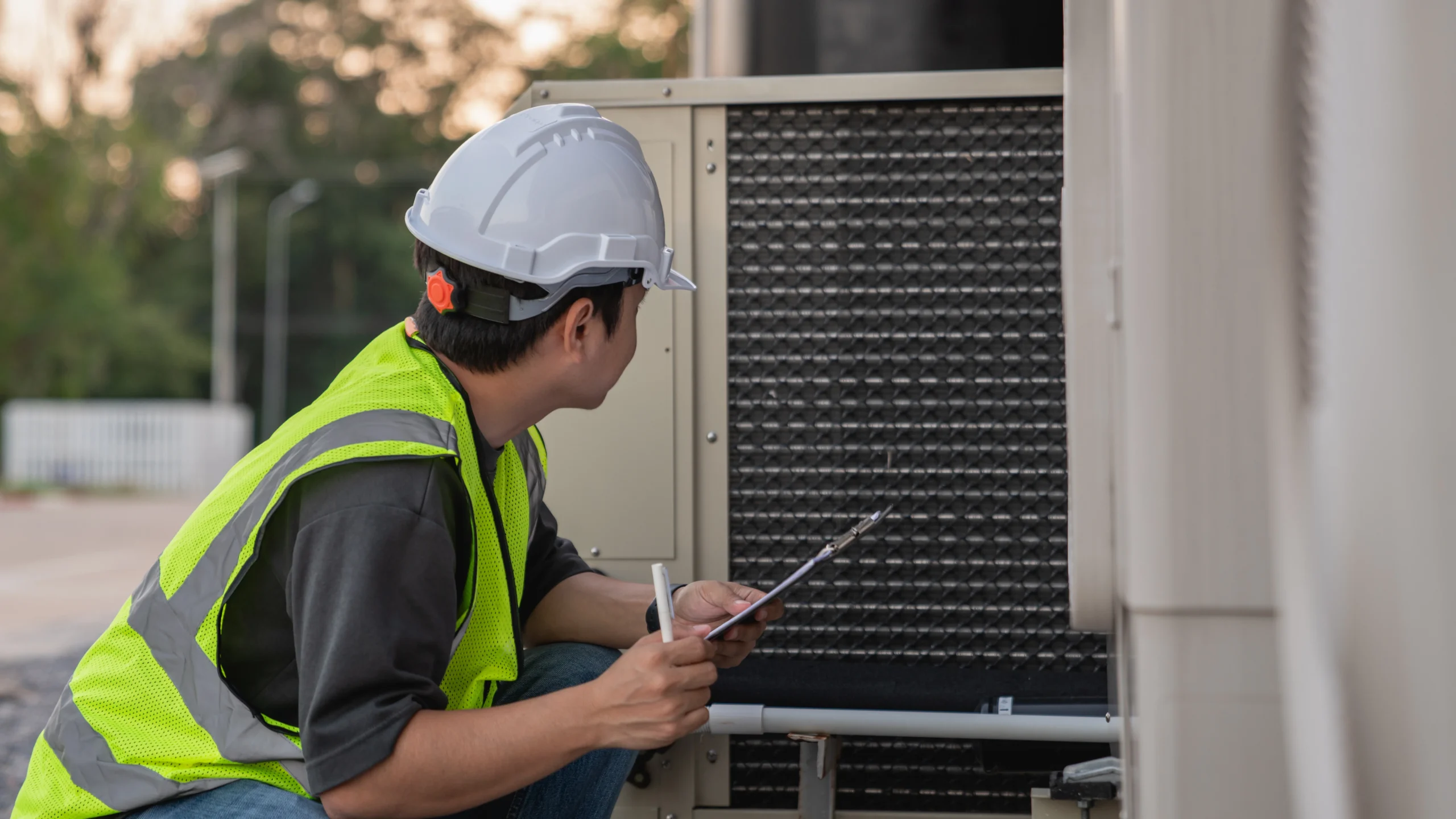
Homeowner maintenance is important, but it does not replace professional HVAC service. A qualified technician can inspect electrical connections, motors, controls, coils, blower components, safety devices, and the refrigerant circuit.
Professional maintenance may also identify developing problems that are not obvious during a visual inspection. Many homeowners schedule service before the season when their system will be used most heavily. If you have both heating and cooling equipment, ask your HVAC professional whether separate seasonal visits are appropriate.
Routine maintenance cannot prevent every breakdown, but it can help identify certain issues before they become more serious.
10. Know When to Call an HVAC Technician
Knowing when to stop a DIY maintenance task is just as important as knowing what you can safely do yourself.
Call a professional HVAC technician if you notice:
- Refrigerant leaks or suspected low refrigerant
- Water leaking around the indoor unit
- Burning smells or unusual electrical odors
- Repeated circuit-breaker trips
- Unusual grinding, buzzing, or squealing
- Significant loss of heating or cooling
- Poor airflow that does not improve after replacing the filter
- Frequent system cycling
- Ice forming on the refrigerant lines or indoor coil
- Electrical or refrigerant-related problems
Do not remove electrical panels, work on wiring, or open the refrigerant circuit unless you are appropriately trained and certified to perform that work.
Regular HVAC maintenance can help Griffin homeowners maintain comfort, support efficiency, and catch potential problems early. Simple tasks like changing filters and keeping vents and outdoor units clear can make a difference.
For inspections, repairs, and professional HVAC maintenance, AComfort can help keep your heating and cooling system ready for every season.
A Simple HVAC Maintenance Checklist for Homeowners
A consistent maintenance routine does not have to be complicated. Start by checking your air filter regularly, keeping vents unobstructed, and maintaining a clear area around the outdoor unit.
Throughout the year, watch for changes in airflow, temperature control, sounds, odors, water, and overall system performance. These signs can help you determine when your system needs professional service or when HVAC replacement may be worth considering.
Then schedule professional maintenance according to your equipment manufacturer's recommendations and your HVAC technician's advice.
Keep Your HVAC System Ready for Every Season
Proper HVAC maintenance is a combination of simple homeowner care and professional service. Replacing the air filter, keeping vents clear, maintaining the outdoor unit area, and monitoring system performance are practical steps most homeowners can incorporate into their routine.
More technical work—such as inspecting electrical components, cleaning difficult-to-access coils, diagnosing refrigerant problems, and servicing the refrigerant circuit—should be handled by a qualified HVAC professional.
Following these HVAC maintenance tips can help Griffin homeowners maintain reliable heating and cooling, support system efficiency, and address potential problems before they develop into costly repairs. When something seems beyond a simple maintenance task, call a professional HVAC technician rather than risking damage to the equipment or your home.
Keep Your Griffin HVAC System Running Smoothly
Regular maintenance can help your HVAC system perform reliably through Georgia's changing seasons. If your system needs professional maintenance, inspection, or repair, AComfort is ready to help.
Schedule HVAC Service Today